Course Instructor: Dr. Feiya Luo
Semester: Spring 2023
Laying the Foundation: A Structured Approach to Instructional Design
AIL 602 provided a foundational experience in understanding and applying instructional design principles, especially within technology-mediated learning environments. Through a structured approach to the design process—from needs assessment to evaluation—I gained essential skills to design impactful learning interventions grounded in evidence-based practice. This course directly aligned with my professional goals by equipping me with the ability to analyze learner needs, sequence content effectively, and select strategies aligned with learning outcomes. One of the most transformative effects of the course was learning how to
systematically approach instructional problems and make data-driven design decisions.

From Theory to Practice: Designing for Immersive Learning in Engineering Education
This class had a significant influence on my professional practice, particularly in designing an Immersive Virtual Reality (IVR) training intervention for undergraduate civil engineering students focused on hazard identification. Applying the task and learner analysis frameworks helped me tailor the IVR content to fit the cognitive and contextual needs of engineering learners. Moreover, the alignment mapping between strategies, materials, and assessments ensured that the immersive learning environment was not only engaging but also instructionally sound. This course was critical in helping me bridge theoretical knowledge with practical, innovative application.
Instructional Planning with Gagné’s Nine Events
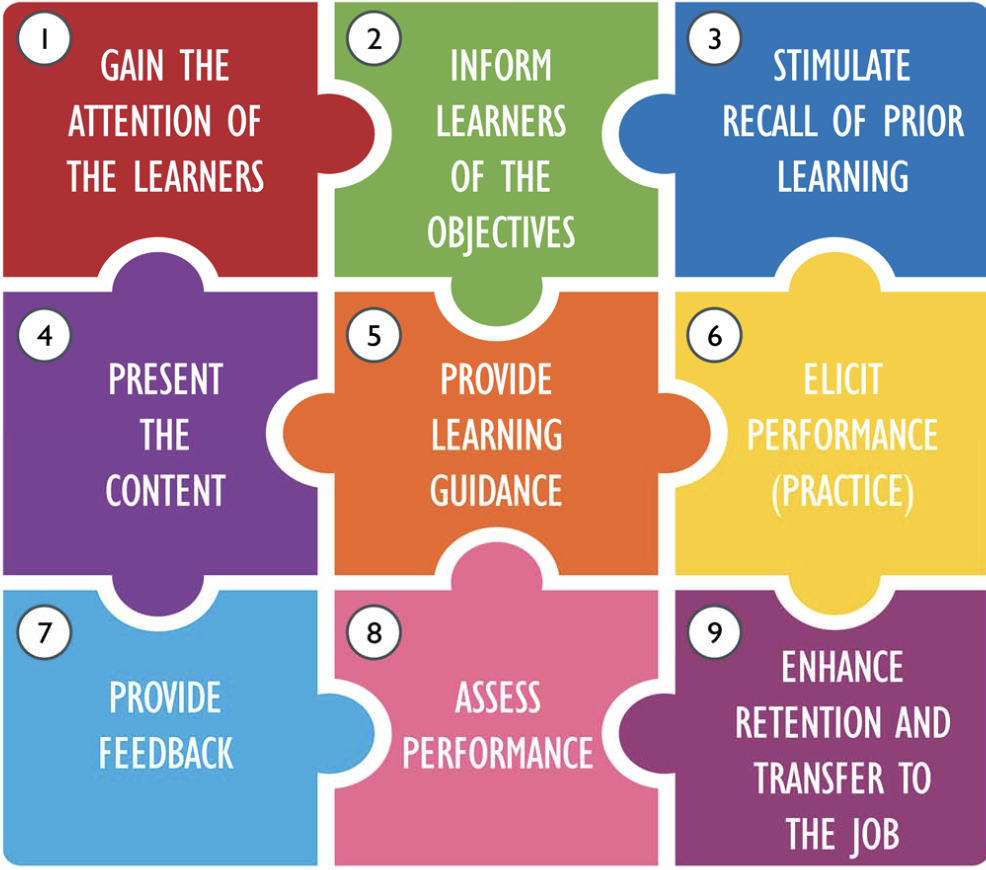
One of the most practical assignments in the course was the development of the Instructional Design Planning Sheet using Gagné’s Nine Events of Instruction. This assignment provided a step-by-step structure for organizing content delivery and learner engagement strategies. By mapping each event, from gaining attention and stating objectives to providing feedback and enhancing retention. The skills I gained from the blueprint I developed significantly contributed to the design of my IVR intervention. The planning sheet helped me think critically about pacing, sequencing, and the psychological readiness of learners as they interacted with each stage of the instruction. It also reinforced the importance of scaffolding and reinforcement in digital learning environments.
Strengthening My Professional Identity
AIL 602 was not only foundational to my academic development but also transformative in shaping my professional identity as an instructional designer. It gave me the vocabulary, tools, and structured methodology to create instruction that is effective, inclusive, and responsive to real-world learning needs, particularly through emerging technologies like immersive virtual reality. The combination of theoretical grounding and practical application from this course continues to influence my instructional design decisions in meaningful ways.
Sample of my work
Instructional Design Presentation
This presentation provided an overview of instructional design, including its definition, purpose, processes, and key models such as ADDIE. It introduced the role of instructional designers and highlighted career opportunities in the field, helping lay the foundation for deeper exploration of instructional design throughout the course.
This work enhanced my ability to communicate core instructional design concepts clearly and effectively. It also deepened my understanding of the systematic nature of instructional design and the importance of aligning content, objectives, and learner needs—principles I applied in developing my IVR-based training interventions.
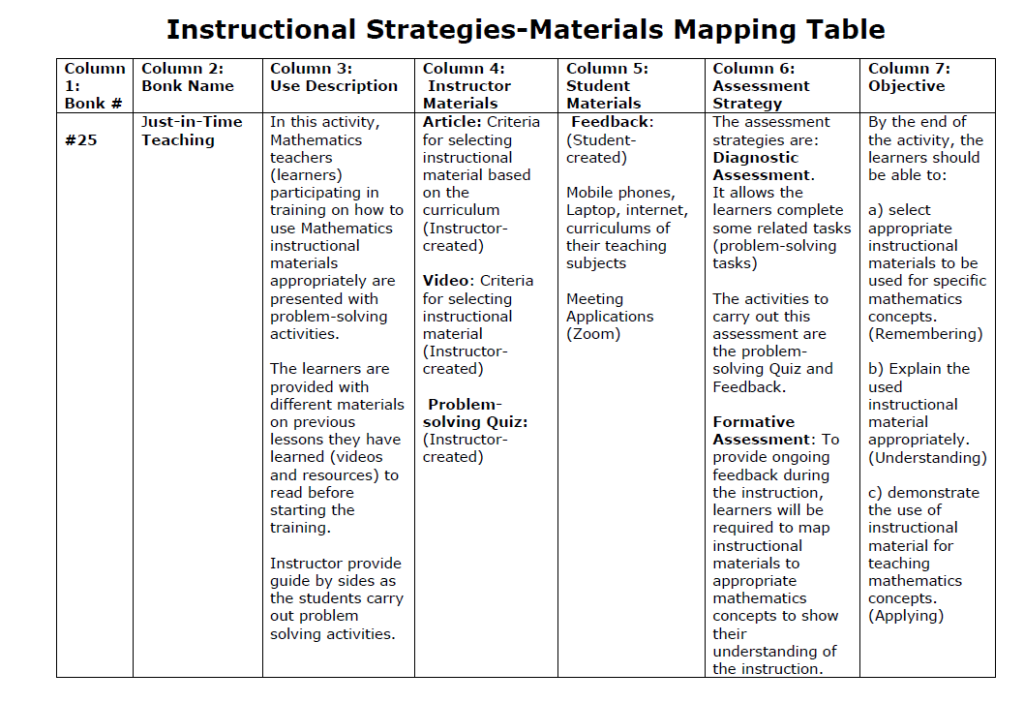
Instructional Strategies-Materials Mapping Table
This presentation applied Bonk’s TEC-VARIETY framework to design two technology-enhanced instructional activities—Just-in-Time Teaching and Technology Tool Demonstrator—for training mathematics teachers on selecting and using instructional materials effectively. The mapping table aligned instructional strategies, materials, assessments, and objectives to ensure coherence and impact.
I strengthened my ability to align instructional objectives with appropriate strategies and materials, grounded in real-world teaching contexts. This work sharpened my design thinking and helped me develop a more structured approach to integrating interactive technologies in instruction. The experience directly informed how I structured learning flow and material selection in my IVR training for civil engineering students.