
Course Instructor: Dr. Margaret Rice
Semester: Fall 2024
Course Impact and Alignment with Goals
AIL 604 significantly deepened my understanding of the theories, tools, and challenges related to designing, delivering, and evaluating distance learning environments. This course aligned well with my degree and professional goals, particularly as I aim to design accessible, adaptive, and immersive learning experiences for diverse learners. Each module provided actionable insights that I applied in my instructional design practices—most notably, in the development of an Immersive Virtual Reality (IVR) intervention for civil engineering undergraduate students. Through this course, I gained not only theoretical knowledge but also hands-on design experience that shaped my approach to inclusive and engaging online learning.
Technology Tool Infographic
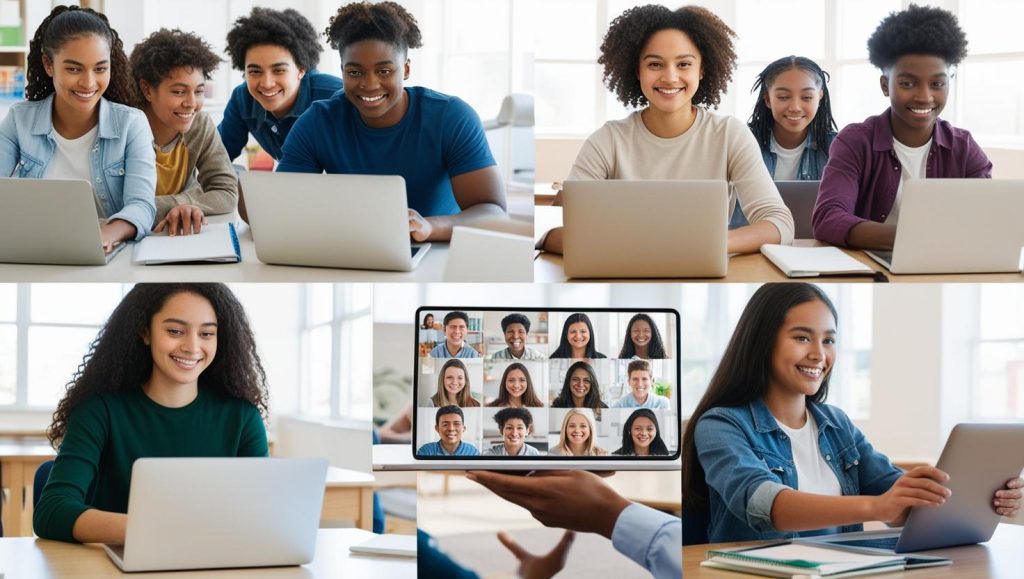
One highlight was Module 4’s Technology Tool Infographic, where I explored a variety of emerging tools for distance education. I critically analyzed VR as a distance learning tool and connected this to my own IVR-based hazard identification training for civil engineering students. This assignment enhanced my ability to evaluate digital tools based on instructional value, accessibility, and learner engagement. It also reinforced my belief in integrating immersive technologies in online learning settings to enhance cognitive presence and learner motivation.
Design Application
Another pivotal experience was Module 7’s Online Course and Video Project. In this assignment, I designed an online course prototype aligned with UDL principles and multimedia learning theory. I created a course video that incorporated branching scenarios and learner decision points. This project sharpened my skills in backward design, modular content delivery, and media development, all of which are central to my work as an instructional designer.
Understanding Learner and Faculty Needs
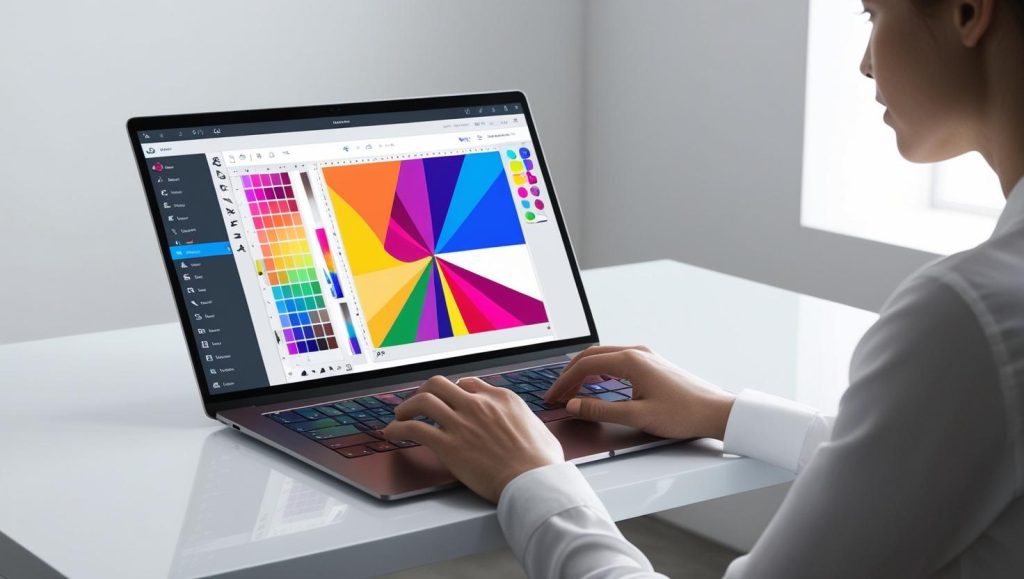
Through AIL 604, I also developed a more nuanced understanding of student and faculty challenges in distance learning environments. These insights were invaluable in designing the IVR system to account for factors such as cognitive load, learner support, and self-regulation, particularly for students in engineering disciplines who may be new to immersive learning formats.
ARTIFACTS
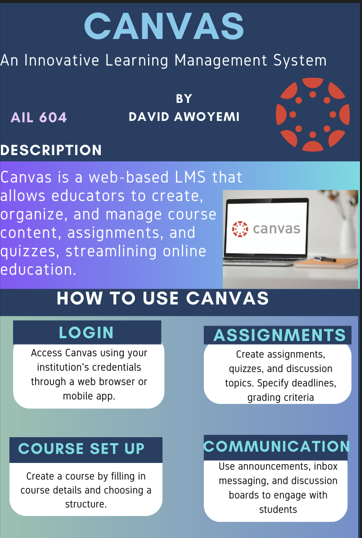
Technology Tool Infographic: Canva LMS
For this assignment, I created an infographic using Canva that highlights Canva LMS as an effective technology tool for teaching online courses. The infographic described Canva LMS as an intuitive, cloud-based platform that allows educators to create visually engaging course materials, organize modules, and facilitate asynchronous learning experiences. It included explanations of how to navigate the platform, design learning assets, and embed multimedia content for enhanced learner engagement. I submitted the infographic in a shareable format (JPEG with an accessible URL) and participated in peer feedback as instructed.
Through this activity, I honed my ability to communicate complex information visually, evaluate an educational technology based on instructional relevance, and connect platform features to pedagogical goals. Specifically, I analyzed how Canva LMS supports collaborative design, learner autonomy, and accessible content creation—insights that were especially relevant for my work in developing IVR-based instructional experiences. This assignment reinforced the importance of clear visual communication and user-centered design when selecting and integrating tools for distance learning environments.
Canvas Online Course Design
For this culminating project, my partner and I collaboratively designed a prototype online course titled The Principles of Instructional Design using the Canvas Learning Management System (LMS). The course was structured to model best practices in instructional design, incorporating clear learning outcomes, modular content, varied assessments, and multimedia resources. Alongside the course, we created a narrated video that walked viewers through our design process, explaining how we applied key multimedia learning principles, learner-centered strategies, and accessibility considerations.
This project strengthened my skills in course architecture, video scriptwriting, multimedia editing, and the practical application of instructional design models such as ADDIE and UDL. The hands-on experience with Canvas deepened my understanding of organizing content in a coherent, engaging, and inclusive way. Additionally, the narrated video helped refine my ability to articulate design decisions clearly—an essential skill for working with stakeholders and teams in professional instructional design settings.